About Us
Cast & Crew
Contact Us
|
Years ago, while teaching college courses in the History of American Musical Theatre, my research exposed numerous instances of innovation in the art form (“this was the first time…”) as theatrical technologies, along with musical styles and forms, evolved. I began to “collect” such phrases, which later included people, theatrical venues and other occasional oddities, into the collection and organized the data chronologically. |
|
At this site, we focus on historical firsts. Innovation creates history, and this is a collection of innovative events, decisions and inventions. Among other things, the collection includes initial appearances of popular shows, songs and performers. Here, you’ll find descriptions of theatrical firsts in America from 1665 to 2000. Each “historical first” appears in bold type. |
|
Generally, the New York opening is considered the finished form of any work (even if subsequent changes occur during the New York run). For the sake of maintaining some historical perspective, this site covers events through the 1999-2000 season. |
|
Ongoing additions to the site include textual entries and pictures of people and theatrical venues. One project will soon offer links to audio files of songs in the public domain; other improvements may occur as they are invented or suggested. |
|
We owe much to those who have assisted in the development and presentation of this material. Please see our “Cast & Crew” page. To everyone who appears there, I offer my deepest thanks. |
|
Perhaps you will find something here that will initiate your own research. You might want to have an item considered for inclusion at the site (if so, please contact me). You might wish to correct an error that you find here (if so, by all means contact me). You may even find items that will pique your curiosity and motivate you to seek answers. We hope that this site will bring you closer to the theatrical art form that has proven time and again to be our most beloved: the musical. |
|
Wayne Hamilton, MFA 2009 |
|
|||||||||||||||||||
|
Thank you for visiting FirstOnStage.com, a web site that was literally decades in the making. We hope you find the information here useful in your classes, in your research or in exercising your intellectual curiosity. If so, we hope you’ll make a donation to help support FirstOnStage. This information comes to you quickly and easily without the cost of expensive textbooks or hours of searching for the proverbial needle in the digital haystack. Your gift will enable site developers to provide ongoing enhancements, including additional textual content, pictures and audio files. PayPal will safely and securely process the transaction. Thanks for your interest and your generous support! |
|
Visitor Count: |
000080073 |
|
A revival of Gilbert and Sullivan's Pirates of Penzance in January of 1981 offered the Broadway debut of pop singing star Linda Ronstadt. She received a Best Actress in a Musical Tony Award nomination for her work. Fellow cast members George Rose and Kevin Kline were nominated in the Best Actor in a Musical category; Kline won the award. Pirates of Penzance won a Tony for Best Reproduction (revival) and director Wilford Leach won as Best Director of a Musical. The Drama Desk also named Pirates of Penzance Best Musical.
|
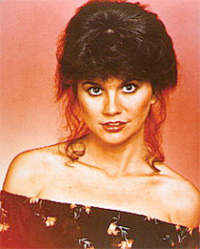 A revival of Gilbert and Sullivan's Pirates of Penzance in January of 1981 offered the Broadway debut of pop singing star Linda Ronstadt. She received a Best Actress in a Musical Tony Award nomination for her work. Fellow cast members George Rose and Kevin Kline were nominated in the Best Actor in a Musical category; Kline won the award. Pirates of Penzance won a Tony for Best Reproduction (revival) and director Wilford Leach won as Best Director of a Musical. The Drama Desk also named Pirates of Penzance Best Musical.